01 / Case Study
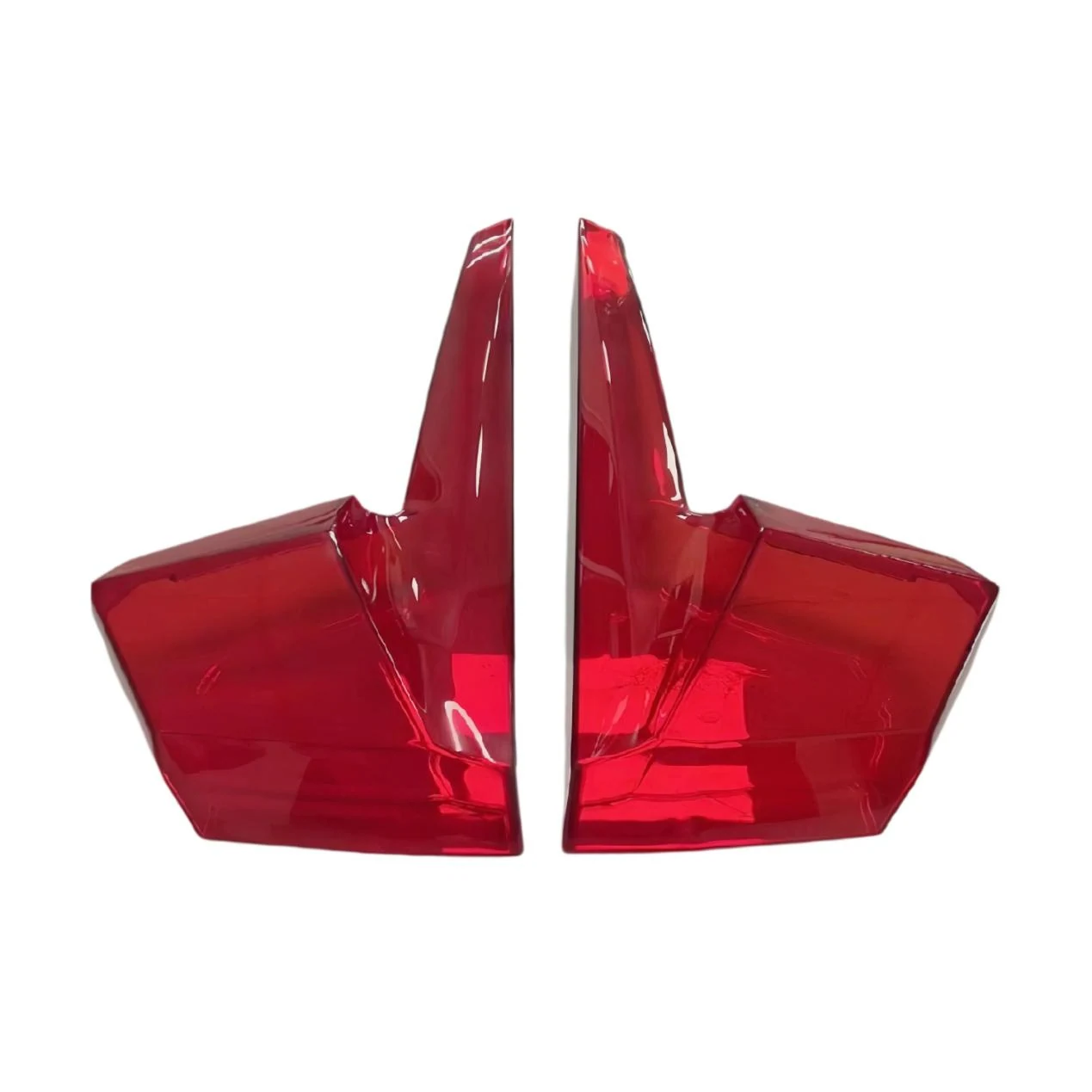
A transparent PMMA tail-light prototype combining freeform CNC milling with progressive polishing and coloring for appearance validation.
Engineering Record
Transparent PMMA is brittle and sensitive to cutting heat. Excessive heat can create whitening or local melting, while sharp edges and thin sections are vulnerable to chipping. The tail-light geometry also combined complex freeform surfaces with an appearance requirement that made tool marks and surface defects easy to see.
Because the prototype was intended for appearance validation, the machining result had to support both the designed freeform shape and the later optical finishing sequence. Protecting the edges during cutting was therefore part of the surface-quality plan, not a separate cosmetic correction.
The machining plan used higher spindle speed, shallow passes and compressed-air clearing to manage heat around the brittle PMMA. Roughing and finishing were separated so the freeform surfaces could be refined without placing unnecessary load on thin walls and edges.
After machining, the surfaces were sanded progressively and polished by hand before coloring. This sequence supported the required high-gloss, light-transmitting appearance while keeping the real prototype geometry visible for review.
The recorded project result met the appearance-validation requirement without unacceptable edge chipping or surface defects. The finished pair provided the intended optical appearance for evaluating the tail-light design concept.
Related Capabilities
Project Review
Upload your drawings and share the material, process and finishing requirements that matter to your project.
Upload Drawings & Request a Quote