02 / Case Study
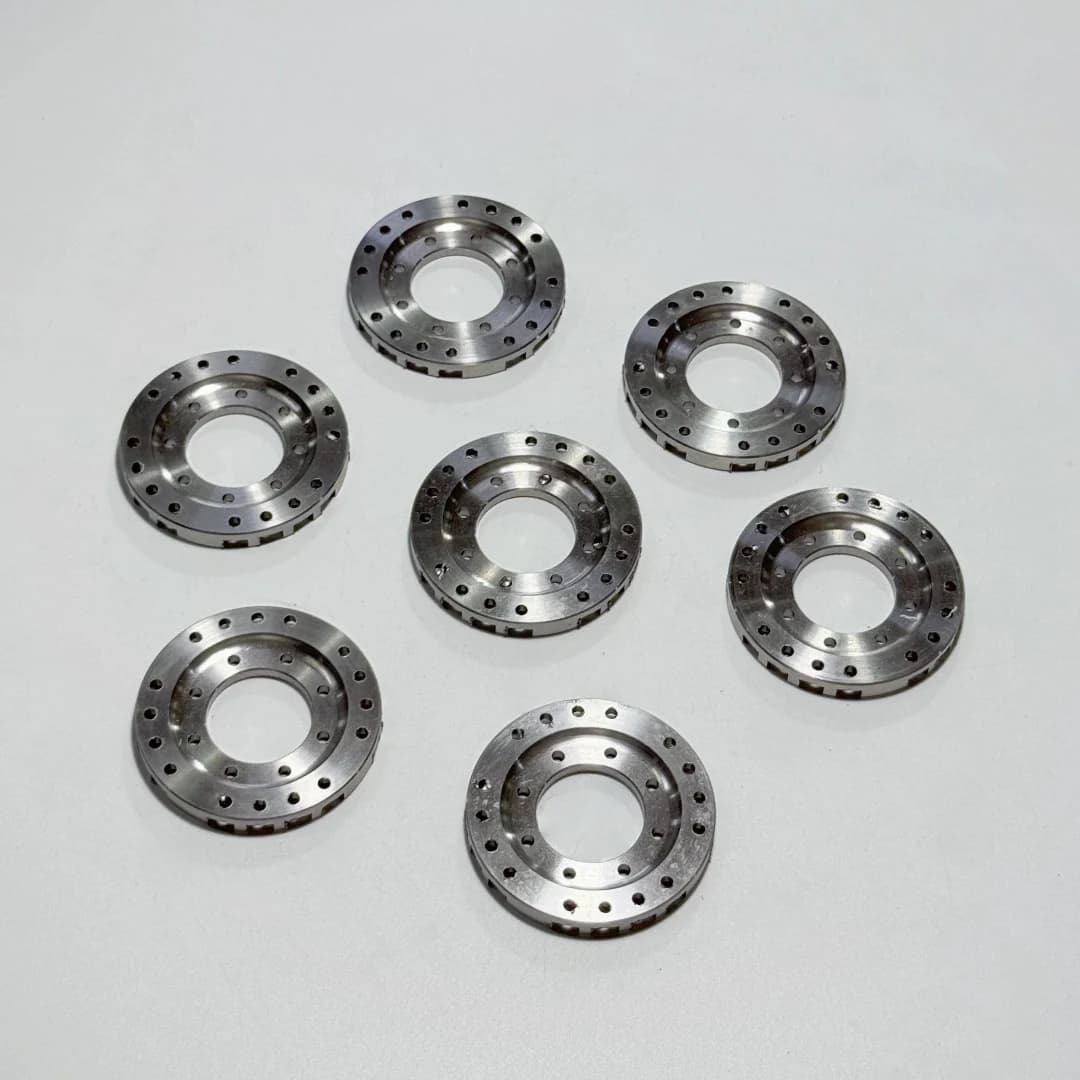
A 304 stainless steel vacuum flange machined around a controlled turning setup, followed by drilling and local milling.
Engineering Record
The 304 stainless steel flange required control of the principal rotational features, face flatness and concentric relationships. The circular mounting-hole pattern also had to align with the assembly, so the process sequence needed to protect both turned geometry and later positional features.
The part could not be treated as a simple ring: the relationship between the sealing face, internal and external diameters, steps, groove and mounting pattern determined whether it would fit the prototype assembly as intended.
Where feasible, the outside diameter, inside diameter, steps and sealing face were turned in one setup. Keeping the principal rotational features together reduced the positioning error that can be introduced by repeated clamping and supported consistent relationships between the faces and diameters.
Cutting parameters were selected to control the turned face condition. Drilling of the circular mounting pattern and local notch machining were then completed as subsequent operations, followed by dimensional checks against the drawing.
Inspection confirmed that the project drawing requirements for the faces, concentric features, groove geometry and mounting-hole positions were met. The completed flange set supported the prototype assembly requirement recorded for the project.
Related Capabilities
Project Review
Upload your drawings and share the material, process and finishing requirements that matter to your project.
Upload Drawings & Request a Quote